
May 11, 2026
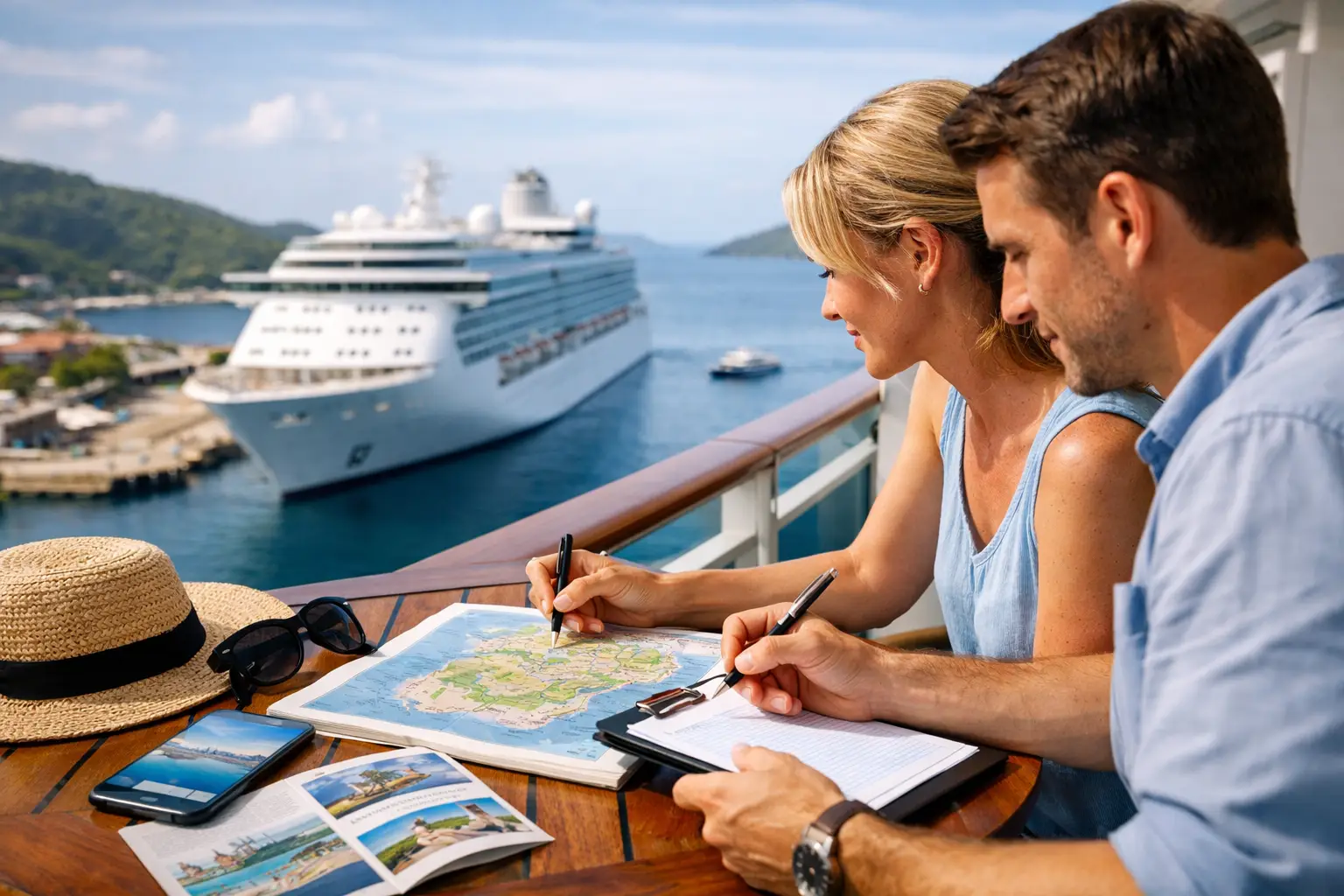
The easiest way to waste a port day is to choose an excursion before you understand the port. A scenic beach transfer might sound great when you book it, but if your ship is only docked for six hours, the beach is an hour away, and all-aboard is earlier than expected, that relaxing plan can turn into a rushed one. If you want to know how to plan cruise excursions well, start with the structure of the day, not the sales pitch.
Cruise excursions work best when they match three things at the same time: your port schedule, your travel style, and your tolerance for risk. That sounds simple, but many travelers focus on only one. They pick the most popular tour, the cheapest option, or the most ambitious itinerary item. Better planning comes from looking at the whole picture.
How to plan cruise excursions around the port day
Every port call has its own limits. Some ships dock close to the main town. Others require a shuttle, a long pier walk, or a tender ride. Some itineraries give you ten hours in port. Others offer a short stop where one delay changes the entire day.
Before you book anything, confirm the actual arrival time, onboard time, and whether your ship is docking or tendering. That one detail changes how much usable time you really have. A port listed as 8:00 a.m. to 5:00 p.m. may not give you nine full hours off the ship. Guests often disembark in waves, and you may need to be back well before departure.
It also helps to understand what the port is good for. Some stops are best for beach days. Some are better for historical sightseeing, snorkeling, food tours, or simple self-guided walking. The mistake is treating every port like it needs a major excursion. In some places, the smartest move is a short plan with room to explore on your own.
Start with your real goal, not the excursion catalog
A better excursion plan starts with a basic question: what do you actually want from this port?
That answer matters more than travelers sometimes expect. If your goal is to see a famous site, you should prioritize reliable transportation and time certainty. If your goal is to relax, a highly structured full-day tour may work against you. If you are traveling with kids, older relatives, or a mixed-mobility group, the best excursion is often the one with fewer transitions and less waiting, not the one with the longest itinerary.
This is where trade-offs show up. The tour with the most stops may give you less time to enjoy any of them. The private option may offer flexibility, but it can require more planning and a stronger backup plan. A self-guided day can be efficient in a compact port, but stressful in a spread-out destination with limited transportation.
When you define the purpose of the stop first, the choices narrow quickly.
Good excursion planning usually comes down to one priority
Most successful port days are built around one main goal and one secondary option. Maybe your main goal is a ruins tour and your secondary option is time to shop near port. Maybe it is a beach club with enough buffer to walk the local area afterward.
Trying to fit sightseeing, food, shopping, swimming, and free exploration into a short port call usually creates a day that feels rushed. Cruise itineraries already move fast. Your excursions do not need to do the same.
Compare ship tours and independent tours realistically
This part of how to plan cruise excursions gets oversimplified. Ship-sponsored excursions are often framed as easier, while independent tours are framed as cheaper or more authentic. Sometimes that is true. Sometimes it is not.
Ship excursions are typically simpler to book and easier to match with your schedule. They can make sense in ports with long travel times, complicated transportation, or tight all-aboard windows. That extra structure is especially useful when the destination is far from the pier.
Independent tours can offer smaller groups, more flexibility, and different timing. They can be a strong option in ports where operators are experienced with cruise schedules and the logistics are straightforward. But they require more homework. You need to check meeting points, travel time, cancellation terms, and whether the operator is clearly used to cruise passengers.
The best choice depends on the port. In a compact city where attractions are close by, independent planning is usually easier. In a port where the highlight is two hours inland, the margin for error is smaller.
When self-guided is the smarter choice
Not every stop needs a formal tour. In some ports, walking on your own is the best use of time. That is especially true when the cruise terminal is near a historic center, waterfront, or well-known local area.
A self-guided plan works best when the route is simple, transportation is predictable, and your priorities are flexible. It is less ideal when you are trying to reach a distant attraction, navigate language barriers under time pressure, or coordinate a large group with different interests.
Self-guided does not mean unplanned. It still helps to know the return route, estimated transit time, and the point where you need to head back no matter what.
Build your day backward from all-aboard time
One of the most practical ways to plan an excursion is to start with the latest safe return time and work backward. This keeps your decision grounded in the cruise schedule instead of the ideal version of the day.
If all-aboard is 4:30 p.m., do not plan to return to the port area at 4:20 p.m. Give yourself a real buffer based on the port layout. If you need a shuttle from town to the terminal, or a tender from shore to ship, that buffer should be larger.
This matters even more for beach days and independent sightseeing, where it is easy to lose track of time. A return plan should never depend on perfect traffic, immediate taxi availability, or a line-free terminal entrance.
If the excursion itself takes most of the port call, ask a simple question before booking: what happens if it runs 30 to 45 minutes late? If the answer is that your day becomes stressful, that is a sign the schedule may be too tight.
Research the friction points before you book
Travelers usually research the highlights of a port. Fewer research the friction points, which are often what shape the day.
Check how far the cruise pier is from the main attraction area. Confirm whether transportation is easy to find or commonly congested. Look at whether the port uses tenders, whether local beach clubs require advance reservations, and whether major attractions tend to involve long transfer times.
This kind of research is not glamorous, but it is what helps a port day run smoothly. A great excursion on paper can feel mediocre if half the day is spent getting to it.
For newer cruisers, this is often the difference between a port that feels easy and one that feels confusing. For experienced cruisers, it is usually the fastest way to cut through unnecessary planning mistakes.
Match the excursion to your energy level across the itinerary
A common planning mistake is evaluating each port by itself. That sounds logical, but cruise travel is cumulative. A physically demanding excursion may be fine on day two and less appealing after several busy stops in a row.
Look at your itinerary as a sequence, not a set of separate days. If you already have two active port calls with early mornings, your third stop may be better suited to a lighter plan. If your cruise includes a sea day right after a demanding excursion, that may be the best place to schedule something more ambitious.
This is especially useful on itineraries with several similar ports. You do not need to maximize every stop. You need a pace you will still enjoy by the end of the sailing.
Use a simple filter when choosing excursions
If several options look good, use a practical filter: time efficiency, transportation complexity, physical demands, and schedule risk. Those four factors usually tell you more than the tour description.
Time efficiency means asking how much of the day is spent doing the actual experience versus getting there. Transportation complexity covers transfers, meeting points, and how many moving parts are involved. Physical demands should be judged honestly, especially in hot-weather ports or on excursions with uneven terrain. Schedule risk is about how much slack exists between the excursion end and your required return.
VoyagePro is built around this kind of cruise-first planning mindset. The goal is not just finding something to do in port. It is choosing an option that fits the way cruise travel actually works.
Book early when the port has limited obvious options
Some ports have one or two clear headline experiences, and those can fill up earlier than travelers expect. Others offer plenty of interchangeable options, where waiting longer is less risky.
You do not need to rush every booking, but you should identify which ports have limited availability or more complicated logistics. Those deserve earlier decisions. Flexible, walkable ports usually do not.
A useful rule is to finalize the excursions that depend on timing, distance, or reservations first. Leave the easy port days open longer if you want flexibility.
A well-planned excursion should make the port feel easier, not more crowded in your head. The best choices are usually the ones that fit the ship schedule cleanly, match what you actually want from the stop, and leave enough room for the day to go slightly off plan without becoming stressful.