
May 7, 2026
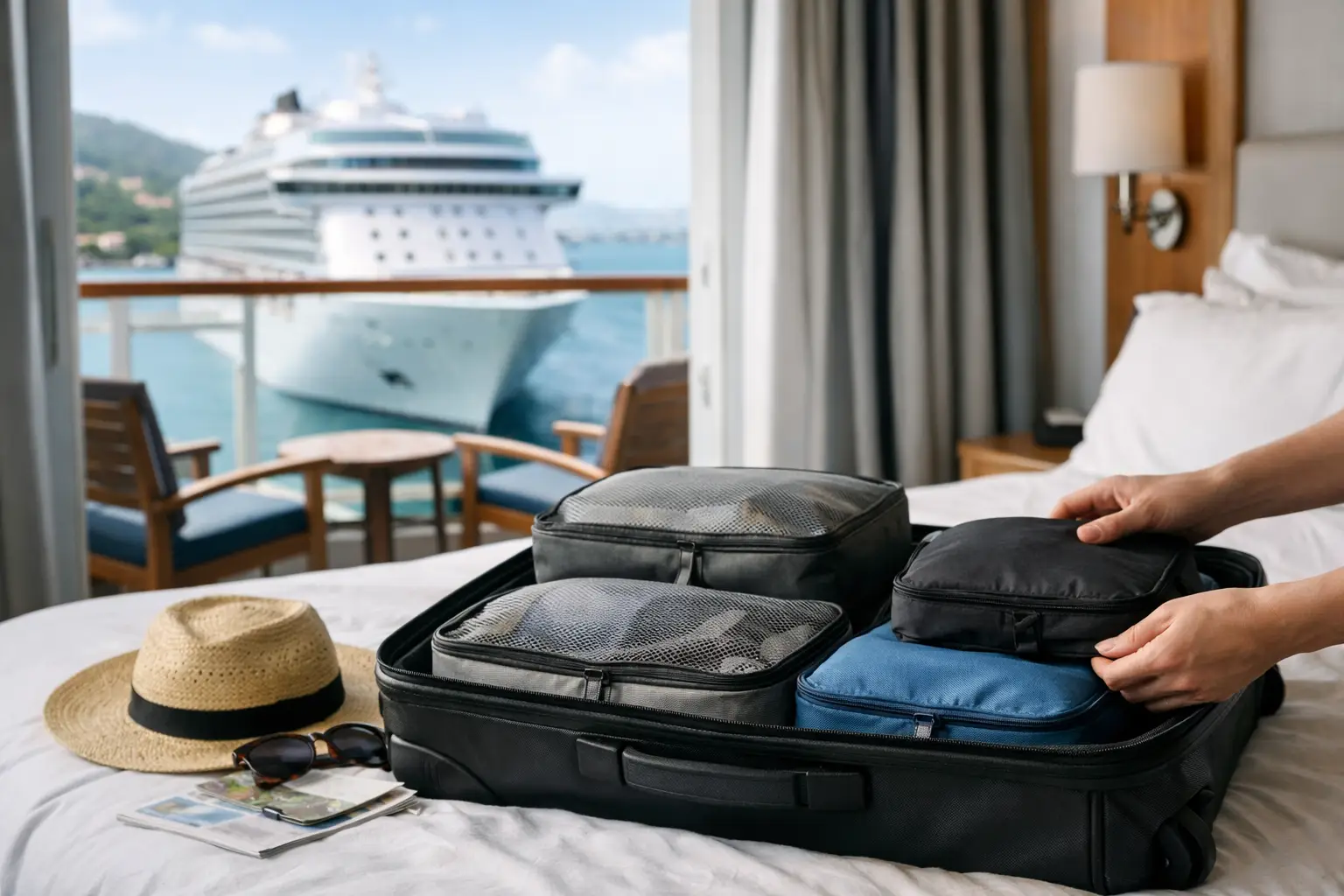
You notice the value of packing cubes for cruises about five minutes after you open your suitcase in a cabin. One person is looking for dinner clothes, someone else needs sunscreen, and the room suddenly feels smaller than it did in the photos. That is where a simple packing system can make a real difference.
For cruise travelers, packing is less about fitting everything into a bag and more about staying organized once you board. You are not usually moving hotels every night, but you are living out of a compact cabin with limited drawer space, a small closet, and two people often sharing the same surfaces. Packing cubes help because they turn one suitcase into several smaller, labeled sections that are easier to unpack, store, and repack.
That does not mean they are automatically the right choice for every cruiser. Some travelers love the structure. Others find cubes unnecessary if they already pack light and unpack fully on day one. The real question is not whether packing cubes are trendy. It is whether they make your specific cruise easier.
Why packing cubes for cruises work so well
Cruise cabins reward organization. Even on newer ships with smart storage, space is limited and clutter builds fast. A few cubes can separate daytime clothes from evening wear, keep swim gear away from dry items, and stop small essentials from spreading across the room. Packing Cubes From our Amazon Store
They also help during the parts of cruise travel that are easy to overlook. Embarkation day is a good example. Your checked luggage may not arrive right away, so keeping a cube in your carry-on with a swimsuit, medications, and a change of clothes can make the first few hours much smoother. The same applies on disembarkation morning, when you may want one cube set aside for travel-day clothes and important items.
Another advantage is speed. If you have used cruise cabin drawers before, you know they can fill up quickly. With cubes, you can move categories straight from suitcase to drawer or shelf without reorganizing each piece. That is especially helpful for families, couples sharing a suitcase, or anyone trying to avoid the classic mid-cruise mess.
When packing cubes may not be necessary
Packing cubes are useful, but they are not magic. If you are taking a short cruise, bringing one carry-on, and packing a very limited wardrobe, cubes may add structure you do not really need. Rolling clothes directly into your suitcase may be enough.
There is also a trade-off with bulk. Some structured cubes hold their shape well, but that same structure can waste space in a smaller suitcase. Soft-sided cubes are usually better for cruise travelers because they conform more easily around shoes, toiletry bags, and awkward corners.
If you tend to unpack everything into drawers and hangers immediately, the benefit may be smaller after day one. In that case, one or two cubes for undergarments, swimwear, or electronics may be more practical than a full set.
How to use packing cubes for cruises effectively
The best approach is to organize by function, not just by clothing type. That matters on a cruise because your days often include multiple changes: breakfast, pool time, port days, dinner, and sometimes a show or themed evening. A cube packed only with T-shirts is less helpful than one built around how you actually use your clothes.
A good setup might be one cube for port-day clothing, one for evening outfits, one for swimwear and cover-ups, and one for sleepwear and undergarments. That way, you are not digging through everything at once. You are pulling out what fits the day.
For longer itineraries, compression cubes can help, but they are not always the best option for every category. They work well for softer items like casual clothes and layers. They are less effective for structured garments that wrinkle easily. If your cruise includes formal nights or specialty dining plans, it is worth keeping dressier pieces in a standard cube or hanging bag instead of compressing them too tightly. Vacuum Compression Packing Cubes from our Amazon Store
Use cubes to separate clean, worn, and damp items
One of the smartest cruise-specific uses for packing cubes is separation. Cabins do not give you much room to quarantine damp swimsuits, sandy cover-ups, or clothes worn for just a few hours. A lightweight extra cube can solve that problem.
This is especially helpful on warm-weather itineraries where pool and shore days are frequent. Instead of mixing damp or lightly worn items back in with clean clothes, you keep them contained. Your suitcase stays more organized, and repacking at the end of the cruise becomes easier.
Keep one cube dedicated to embarkation day
Embarkation has its own rhythm. You may arrive at the terminal in travel clothes, board before your cabin is fully ready, and wait several hours for checked luggage. A small cube inside your carry-on gives you quick access to essentials without digging through everything.
For most travelers, that cube should include medications, chargers, a swimsuit if you plan to use the pool early, and anything you would not want delayed. It is a simple move, but it fits the way cruise travel actually works.
Choosing the right kind of packing cubes
Not all packing cubes are equally useful for cruises. The best choice depends on suitcase size, itinerary length, and how you prefer to unpack.
For most travelers, a mixed-size set works best. Large cubes are useful for bulkier casual clothing, but too many large cubes can become awkward in smaller bags or cabin drawers. Medium and small cubes are usually more flexible because they fit more easily into carry-ons, under-bed luggage, and compact storage spaces.
Material matters too. Lightweight fabric with a mesh panel is often the most practical option. You can see what is inside, the cube breathes better, and the overall weight stays lower. Heavy-duty cubes may sound appealing, but they can add unnecessary weight before you have even packed your first outfit.
Zippers are another detail worth paying attention to. Cruise travel includes flights, transfers, terminal handling, and the usual pressure of getting everything packed back up on the final night. Weak zippers fail at exactly the wrong time. A basic, durable cube with smooth zippers is better than an overbuilt set with too many features.
Best strategies for different types of cruisers
First-time cruisers usually benefit the most from a simple cube system because it reduces decision fatigue. If you are still learning how much cabin storage you will actually have, cubes create order fast. They also make it easier to keep important categories visible instead of buried under the third pair of shorts you forgot you packed.
Families can use cubes to divide one large suitcase by person or by day. That is often more efficient than giving every traveler a separate bag, especially for children. Different colors can help, but labeling matters more than style.
Experienced cruisers may prefer a more selective approach. If you already know your routine, you may only need cubes for the items that tend to create clutter, like undergarments, workout clothes, swimwear, or accessories. The goal is not to force a system. It is to remove friction from your trip.
Common mistakes to avoid
The biggest mistake is overpacking because cubes make everything look tidy. Organization is useful, but it can also hide the fact that you are bringing more than you need. Cruise travelers still need to think about laundry options, dress codes, weather, and how often outfits can realistically be repeated.
Another common issue is packing cubes too tightly. Overstuffed cubes are harder to stack, harder to fit into drawers, and more likely to wrinkle what is inside. It is better to leave a little flexibility than to turn each cube into a brick.
Finally, do not build your system around the suitcase alone. Think about the cabin. A cube that fits perfectly in your luggage but awkwardly in every drawer is less useful once you board. Cruise packing works best when you plan for both transit and onboard living.
Packing cubes are not essential for every traveler, but for many cruise passengers they solve real problems: limited space, shared storage, quick outfit changes, and the constant need to keep a small cabin under control. If that sounds familiar, they are probably worth using. A good cruise plan is not just about what you bring. It is about making the ship feel easier to live in from the first afternoon to the final night.