

For a Marseille cruise day, identify your berth before deciding how much of the city to see. A central arrival near La Joliette and an arrival in the larger northern cruise-port area create different first and last legs. Neither should be treated as a short walk from the ship to the Old Port without checking the actual passenger route.
Choose Marseille itself when you want a day with room to change pace. The Vieux-Port, nearby neighbourhoods and a selected attraction can make a satisfying outing without a distant excursion. The key is getting the transfer right, then keeping the city plan compact enough to enjoy.
The berth changes the practical choice
Marseille Tourism distinguishes the Môle Léon Gourret cruise area from J4 at La Joliette. Its visitor information describes different access options for these locations. Confirm which applies to your ship and whether the terminal instructions have changed for your call.
Marseille Tourism’s port-access instructions describe a free shuttle on ship-call days. Follow the green ground line towards Gate 4 to its signed stop; the office estimates a 5–12-minute walk from the ship. The city-side return entrance is at 9 Quai du Lazaret, between Terrasses du Port and the maritime station. Confirm the day’s service hours with the ship. This is distinct from a cruise line’s paid transfer.
| Arrival arrangement | First question | Planning consequence |
|---|---|---|
| Northern cruise-port berth | How do passengers reach the permitted exit or shuttle? | Include the terminal leg before city travel |
| Central berth near La Joliette | What is the signed pedestrian route? | A city walk might be practical after checking the distance |
| Cruise-line shuttle | Where exactly does it stop and when does it return? | Plan the city loop around that point |
| Prebooked transfer | Can the driver reach the agreed terminal meeting point? | Keep a clear pickup instruction and contact |
A free service can be good value, but its usefulness depends on your day. If a queue or a long walk to the stop would make an important reservation difficult, compare a suitable alternative. Price is one part of the choice; timing, effort and certainty are the others.
Use the Old Port as an organising point
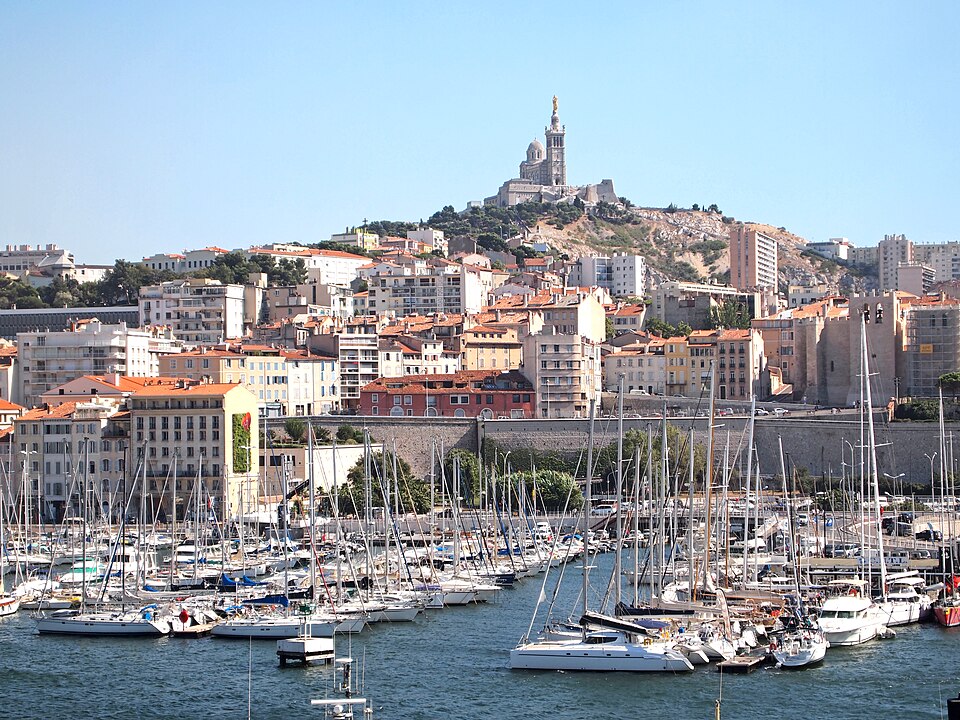
The Vieux-Port is a useful place to orient yourself, have a meal and decide how much more you want to do. It also makes a clearer meeting point than a vague instruction to meet “in the centre.” Choose a precise landmark and keep it with your return details.
For a compact waterfront addition, choose Mucem and Fort Saint-Jean. A footbridge connects the contemporary museum building with the fort; another connects the fort to Le Panier. The fort’s landscaped outdoor areas are free to access during opening hours, while exhibitions are a separate decision. This gives you a worthwhile architecture-and-gardens outing without buying an exhibition ticket merely to fill time. The site normally closes on Tuesdays, so check your call date before building the day around it.
If your party has different interests, agree on a meeting time and place before separating. Make sure everyone has the return-terminal details and a way to contact the group. One person's phone should not be the only copy of the day's practical information.
The city is also a worthwhile choice when you have already booked several long excursions elsewhere on the cruise. A flexible day with a proper lunch can balance the itinerary better than another early start and a coach journey.
Compare effort as well as distance
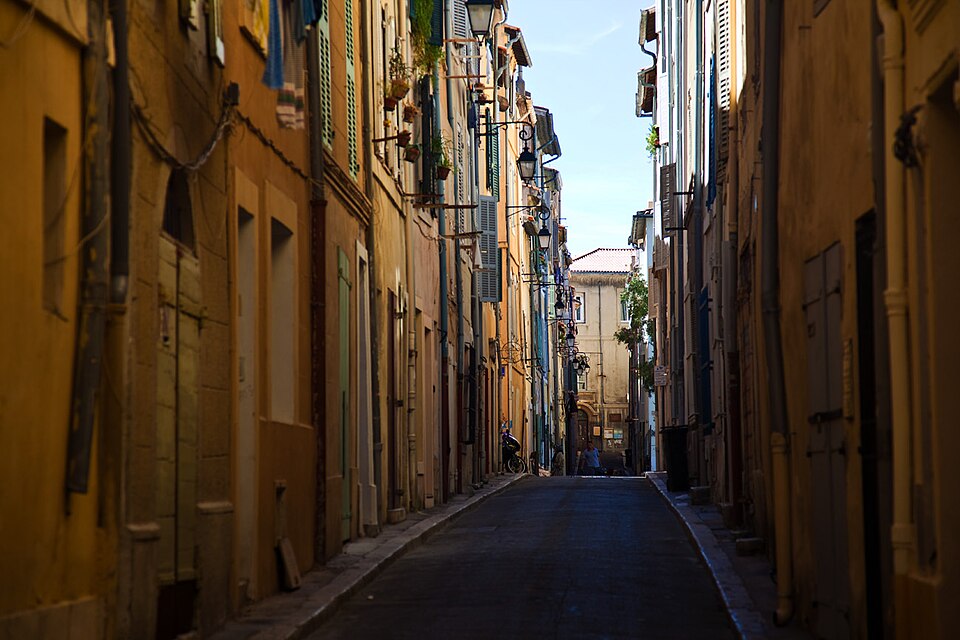
From La Joliette, the tourism office estimates about 25 minutes on foot to the Old Port. That is a useful starting point for a walking day, but it excludes your cruise-terminal transfer. The public 35T bus is a different option from the free shuttle: its Gate 4 stop can leave 600 metres to 2.5 kilometres to the boarding platform. That final leg can outweigh a cheap fare for someone who tires easily.
Think about the energy required at the end of the day. If the route from the shuttle stop to the ship is the most tiring part, save capacity for it. A plan that is comfortable in the morning can feel different after several hours of walking and sightseeing.
For a viewpoint or hilltop attraction, compare the access arrangements rather than assuming walking is the default. Check where transport leaves you, how much walking remains and how you will descend. A vehicle ride to an attraction does not necessarily remove all steps or slopes.
Use the excursion activity-level guide to frame those questions. Specific answers about surfaces and distances are more useful than a description such as “easy city tour.”
Make a time budget that includes waiting
Work backwards from the ship's all-aboard instruction. Establish your intended return to the terminal and the service you will use to get there. Then decide how much time is available for the city, including any queues and the walk to the pickup point.
Imagine a hypothetical seven-hour window between leaving the ship and your planned return. If terminal movements, transport and waiting consume two hours altogether, five remain for sightseeing, food and pauses. That is a sample calculation, not a Marseille transfer estimate. Your berth and chosen service determine the real inputs.
| Part of the day | What to write down | Useful fallback |
|---|---|---|
| Getting into the city | Pickup, service hours and actual drop-off | Alternative transfer with a known meeting point |
| Main attraction | Opening, admission and expected visit length | Nearby activity without a timed ticket |
| Lunch or rest | Location near the route you already chose | Shorter stop rather than another detour |
| Return | Pickup point and a departure that suits your margin | Earlier service or confirmed alternative |
Do not use the final shuttle of the day simply because it is listed. Its timetable and the ship's passenger deadline are different constraints. Choose a return arrangement that works with both, allowing for the uncertainties you have identified.
Know when a Provence excursion is the stronger choice
A trip beyond Marseille makes sense when a particular destination is your priority and the excursion gives it meaningful time. Read the schedule closely: the name of a famous town can hide a brief stop between long transport legs.
Ask how much time is spent at the destination, whether the visit is guided, where the vehicle parks and what walking follows. Check whether lunch or admissions are included and whether there are shopping stops you do not particularly want. Compare the actual day with the Marseille plan you would otherwise enjoy.
If travelling independently, check the return options before buying a timed attraction ticket. A connection that works on paper is less comfortable when there is no useful alternative if you miss it. The ship versus independent excursion guide helps weigh responsibility and flexibility without assuming one arrangement always wins.
Keep a weather alternative close to your route
An exposed waterfront walk, boat outing or viewpoint depends on conditions differently from an indoor visit. Decide which part of the day you would change if the weather makes the original plan unpleasant or unsuitable.
Check the operator's current information before committing to any boat service. A tourism page describing a route is not confirmation of operation on your date. Avoid coupling a weather-sensitive outing with an inflexible second booking unless both can be managed comfortably.
A compact city alternative should remain attractive in its own right. Choose something you would enjoy, rather than treating it as a list of places to fill time until returning to the ship.
Before going ashore, keep the berth, shuttle details, return contact and main attraction confirmation together. Use VoyagePro's port directory to gather the background, then let the ship's current instructions settle the terminal details. That leaves your attention free for Marseille once you have reached it.