Plan Tallinn's Old Town as a route with changes in level, not simply as a short walk from the cruise port. If you enjoy hills and uneven streets, you can make the upper town part of the day. If you need an easier outing, choose a smaller lower-town route and verify its surfaces and access points before leaving the ship.
The distance from the harbour is only one part of the effort. A route can be manageable on the way into town and tiring after several hours of sightseeing. Decide how far you want to go, which climb matters to you and how you will return before you start collecting landmarks.
Locate your terminal before following walking directions
Visit Tallinn’s arrival guide places the cruise area about 1.2 kilometres from the Old Town and gives a general 15–20-minute walk from passenger and cruise terminals, depending on the terminal. Those are useful orientation figures, not a time allowance for the entire Old Town route. Confirm the permitted exit and any shuttle drop-off before adding the climb to Toompea.
A walking estimate is a guide for someone moving continuously. It does not include waiting to disembark, stopping for directions, crossings, photographs or a slower member of the party. Give the first part of the morning enough room that you do not feel behind schedule before reaching the city.
If you choose a transfer, ask for a specific drop-off. “Old Town” can mean different access points, and a convenient vehicle stop may still leave a walk to your first attraction. For a person using a mobility aid, ask about the surface and gradient between that stop and the entrance, not merely whether the vehicle can carry the aid.
Use VoyagePro's port directory when comparing Tallinn with the other stops on your cruise. A day with fewer attractions may fit better between two demanding excursions than a full walking circuit, even if the ship gives you a long call.
Choose upper town, lower town or a limited combination
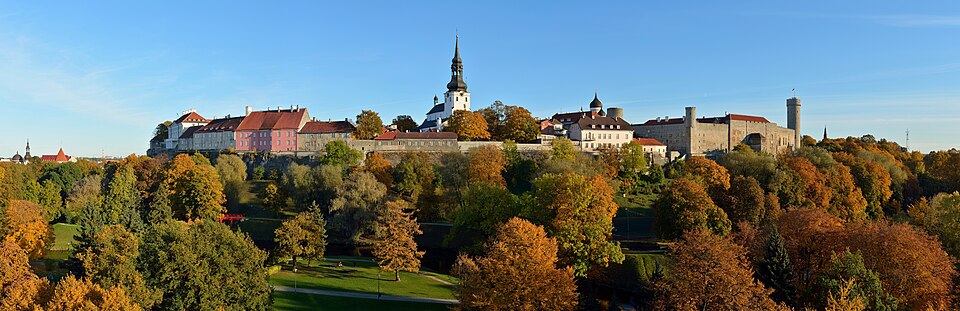
The upper town around Toompea offers a different perspective from the streets below. The decision is whether reaching those viewpoints and buildings is important enough to shape the route. If it is, put the climb at a time when the group has energy rather than adding it as an ambitious final detour.
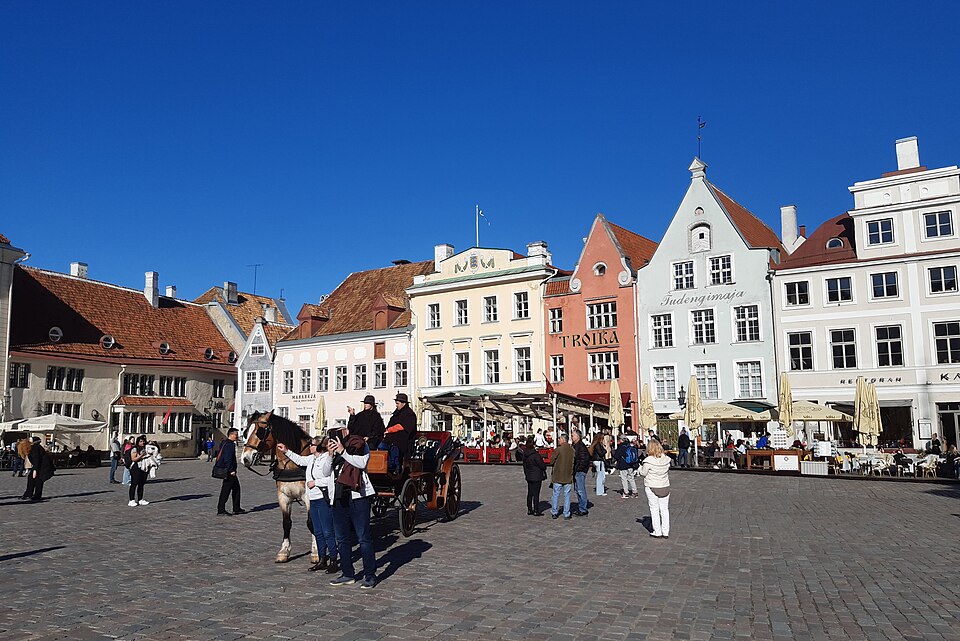
For a lower-town focus, start with Town Hall Square and make time for the surrounding streets and café culture. Visit Tallinn’s Old Town guide highlights Maiasmokk, dating from 1864, and the hidden Masters’ Courtyard. That is a different reward from climbing for Toompea’s panorama: close views of buildings and a relaxed stop rather than a wide city view. Lower town still has historic paving, kerbs and entrance steps; it is not a promise of smooth or level access.
Combining the two works best when you identify a route between them before the day. Do not repeatedly go up and down because separate attractions looked close on a flat map. The return can pass through a different area if it remains easy to navigate and does not create another climb.
| Day design | Best reason to choose it | What to investigate |
|---|---|---|
| Lower-town route | You want historic streets with a modest overall circuit | Paving, crossings, seating and entrance steps |
| Upper town as the priority | Views and Toompea are the main attraction | The ascent, descent and an alternative if the route is unsuitable |
| Upper and lower town | Your group is comfortable with a longer walk | A continuous route that avoids repeated climbs |
| Vehicle-assisted visit | You want to reduce part of the approach | Exact drop-off, remaining walk and return pickup |
Lower-town route
- Best reason to choose it
- You want historic streets with a modest overall circuit
- What to investigate
- Paving, crossings, seating and entrance steps
Upper town as the priority
- Best reason to choose it
- Views and Toompea are the main attraction
- What to investigate
- The ascent, descent and an alternative if the route is unsuitable
Upper and lower town
- Best reason to choose it
- Your group is comfortable with a longer walk
- What to investigate
- A continuous route that avoids repeated climbs
Vehicle-assisted visit
- Best reason to choose it
- You want to reduce part of the approach
- What to investigate
- Exact drop-off, remaining walk and return pickup
Set a walking budget the group can recognise
Distance alone is a poor measure if one person enjoys long walks and another needs regular breaks. Discuss continuous walking time, uphill effort and the need for seating. “We can walk two kilometres” does not settle whether a particular historic route is comfortable.
Imagine a hypothetical group that agrees to walk for twenty minutes at a time before finding a place to pause. That becomes a useful planning rule: choose a short first section, identify a suitable stop and reassess there. It is more practical than promising to finish a large circuit because a map labels it a one-hour walk.
Build the route around the slowest comfortable pace, or agree separate outings. Someone should not have to decide in the middle of a climb whether to continue alone or hold everyone back. A planned split with a clear meeting place gives both groups a better day.
Keep the return effort in reserve. If you walk into town and then spend several hours on your feet, the same distance back to the ship can feel quite different. Save a suitable transport option and the terminal's exact name rather than assuming you will be happy to retrace every step.
Give one indoor visit enough time
Choose an indoor attraction because you want to see it, then check opening hours, ticket arrangements and accessibility. Do not fill the itinerary with several entries simply to insure against bad weather. That can leave you spending more time finding entrances than enjoying the historic centre.
If a church or museum is important, confirm whether the part you want to visit is accessible on your date. A building can be open while a tower, exhibition or special area follows a different schedule. Check whether your ticket covers the relevant section and whether there is a fixed entry time.
For a wheelchair user, a general statement that a venue is accessible is only a starting point. Ask which entrance to use, whether assistance must be arranged and whether the exhibition route includes lifts. Pair that answer with the street approach. Access inside cannot solve an unsuitable route outside.
Lunch can be a useful break rather than an interruption. Choose it near the main route and allow enough time to sit down. If dietary or access requirements matter, settle those before joining a queue at a busy doorway. A meal that requires another uphill detour may undermine the rest you intended.
Treat rain as a surface question too
A wet forecast affects comfort, visibility and the experience of uneven paving. Choose footwear for the walk you actually plan. If conditions make the intended climb unattractive, shorten the route early instead of waiting until the group is tired and far from the return point.
An indoor fallback should be reachable from the area you will already be exploring. Check its hours and admission requirements in advance. “Find a museum” is not much of a plan if the nearest suitable one is closed or requires a ticket slot.
In colder conditions, reconsider how much time you want to spend at exposed viewpoints or waiting outdoors. The best route may have shorter outdoor sections between places where you can pause. That is a different itinerary, not a failed version of the summer walking plan.
Keep a simple return card
Before you leave, save these details offline. A printed card is also useful if your phone battery is unreliable.
| Detail | Your entry |
|---|---|
| Ship's terminal and permitted return entrance | Copy the final onboard instructions |
| All-aboard time | Record the ship's stated time basis |
| Time to leave the last planned stop | Include the return journey and a margin |
| Planned return route | Walking route, shuttle point or arranged pickup |
| Shorter alternative | The place where you can turn back without completing the circuit |
Ship's terminal and permitted return entrance
- Your entry
- Copy the final onboard instructions
All-aboard time
- Your entry
- Record the ship's stated time basis
Time to leave the last planned stop
- Your entry
- Include the return journey and a margin
Planned return route
- Your entry
- Walking route, shuttle point or arranged pickup
Shorter alternative
- Your entry
- The place where you can turn back without completing the circuit
Use the real cruise cost checklist for any transfer, entry and meal costs. Paying for one useful journey may let you enjoy more of Tallinn than spending the same money on another admission.
For more detailed provider questions, use the accessible cruise planning guide, particularly when several transport providers share the route.
A successful Tallinn day need not cover every part of the Old Town. It should leave you with time to notice the streets, enjoy your chosen visit and get back comfortably. Choose the climb deliberately, and let the rest of the route follow from that choice.